

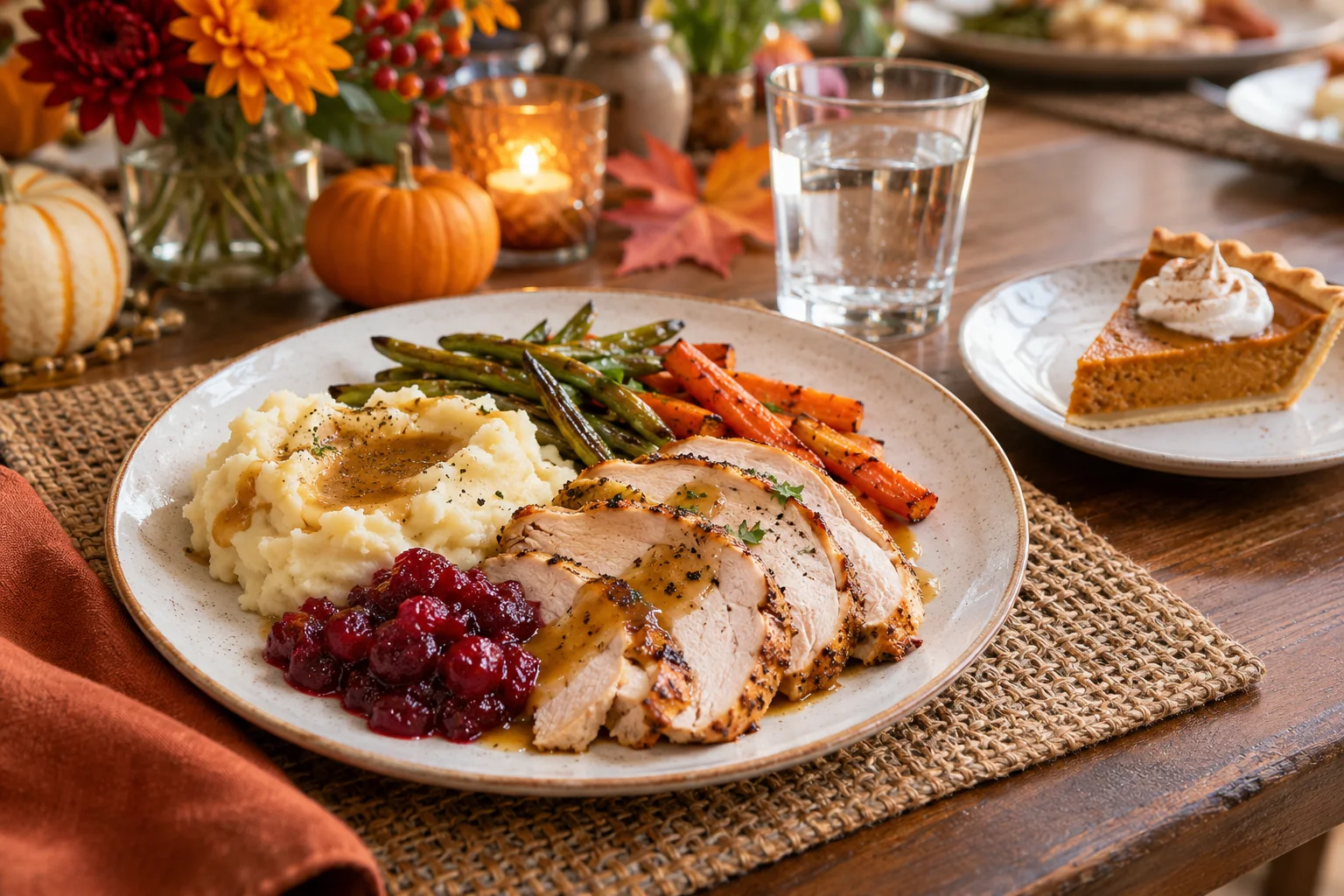
Holiday eating for weight loss is easier to approach when you have a flexible plan for the gathering and the meals around it. You can make room for foods you love, think about portions, and keep ordinary routines going without turning dinner into a test of willpower.
With Thanksgiving approaching, you may already be thinking about family recipes, workplace treats, and a refrigerator full of leftovers. Start by looking at the events you actually have coming up. Then choose a few actions you can use before, during, and after them.
There’s no promise that a particular holiday strategy will produce weight loss. Your longer-term eating pattern and individual needs matter. The aim here is to make choices feel more manageable.
Before the gathering: make the day easier
Keep a realistic meal schedule
Try to avoid arriving at dinner extremely hungry. The CDC’s holiday eating guide, written for people with diabetes, advises against skipping meals to save up for a feast because intense hunger can make overeating more likely.
For a practical example, if dinner is late in the afternoon, plan a breakfast and lunch that suit your usual needs. If the event runs behind schedule and you’re hungry, have an appropriate snack rather than waiting indefinitely.
If you have diabetes or take medication affected by meal timing, follow your care team’s instructions. A general holiday article can’t replace your personal plan.
Choose what you’re looking forward to
Think about which foods make the occasion special for you. Maybe it’s your sister’s stuffing or a slice of a pie you rarely have. Identifying your favorites can help you decide what you want when there are many dishes on offer.
You don’t have to take everything just because it’s there. You also don’t have to remove every favorite from your plate. Choose a combination you expect to enjoy.
Ask about the menu if that would help
If you’re unsure what will be served, ask the host. You could offer to bring something that complements the meal, such as roasted vegetables, a bean salad, or another dish everyone can share.
Keep convenience in the plan. A prepared vegetable tray or simple store-bought side may fit your time and budget better than a complicated recipe.
At the table: enjoy food with a little more intention
Look over the options before serving
Take a moment to see what’s available. Then build a plate around the dishes you want, including foods that make it feel like a complete meal. Turkey, beans, vegetables, potatoes, and other family favorites can all have a place.
If choosing amounts is difficult, begin with a portion you feel comfortable trying. You can decide about more afterward. Our guide to portion sizes for weight loss explains how portions differ from the serving sizes printed on labels.
Give yourself time before deciding on seconds
Once you’ve eaten, pause long enough to notice how you feel. Are you still hungry? Would more of a particular dish be satisfying? Are you comfortably finished?
The pause is a chance to make a decision, not a rule that you must stop eating. You don’t need to compare your plate or pace with anyone else’s.
Make a choice about drinks and dessert
Think about what you’d enjoy drinking with the meal instead of accepting each refill automatically. Water or an unsweetened drink can be a simple option. If you choose another beverage, include it deliberately in your plans.
For dessert, you might want a slice of one favorite, a smaller taste of two options, or something saved for later. The choice doesn’t need a label such as “cheating” or “being good.” It’s a decision about what you want to eat.
Have a reply ready for food pressure
If someone keeps offering more, a short response can help: “That was delicious. I’m comfortable for now.” Or try, “I’d love to take a little home for tomorrow.”
You don’t owe anyone a conversation about your weight. Change the subject to something you’d rather discuss.
After the gathering: return to a workable routine
The National Institute of Diabetes and Digestive and Kidney Diseases emphasizes choosing an eating plan you can maintain over time and regrouping after setbacks. Use that long view when a holiday meal is larger or different from what you expected.
Your next meal is another opportunity to eat in a way that meets your needs. You don’t need to invent a punishing reset. If the urge to start over takes hold, revisit our guide to handling weight-loss setbacks.
Give leftovers a place in an ordinary meal plan. For example, turkey can go into a sandwich, vegetables can become a side, and a favorite dessert can be enjoyed at another sitting. Follow safe food-storage practices and share extras when you have more than you can use.

Between gatherings, keep meal planning simple. Choose a few familiar breakfasts, lunches, and dinners, then use our healthy grocery-shopping guide to build a practical list. You don’t need an entirely new menu for the season.
Your three-part holiday plan
Before your next gathering, write down three decisions:
- Before: What will I eat earlier that day so I’m not arriving extremely hungry?
- During: Which foods am I most looking forward to, and how will I decide whether I want more?
- After: What familiar meal will help me return to my usual routine?
Choose one upcoming event and make that plan today. Leave room to adjust when dinner is late, the menu changes, or you want another helping. A useful plan can bend with the occasion and still give you a next step.
This article is general education, not personal medical or nutrition advice. If you have diabetes, a history of disordered eating, or a prescribed eating plan, seek guidance suited to your needs before changing your routine.
Discover more from Diets & Weight Loss Plans
Subscribe to get the latest posts sent to your email.