

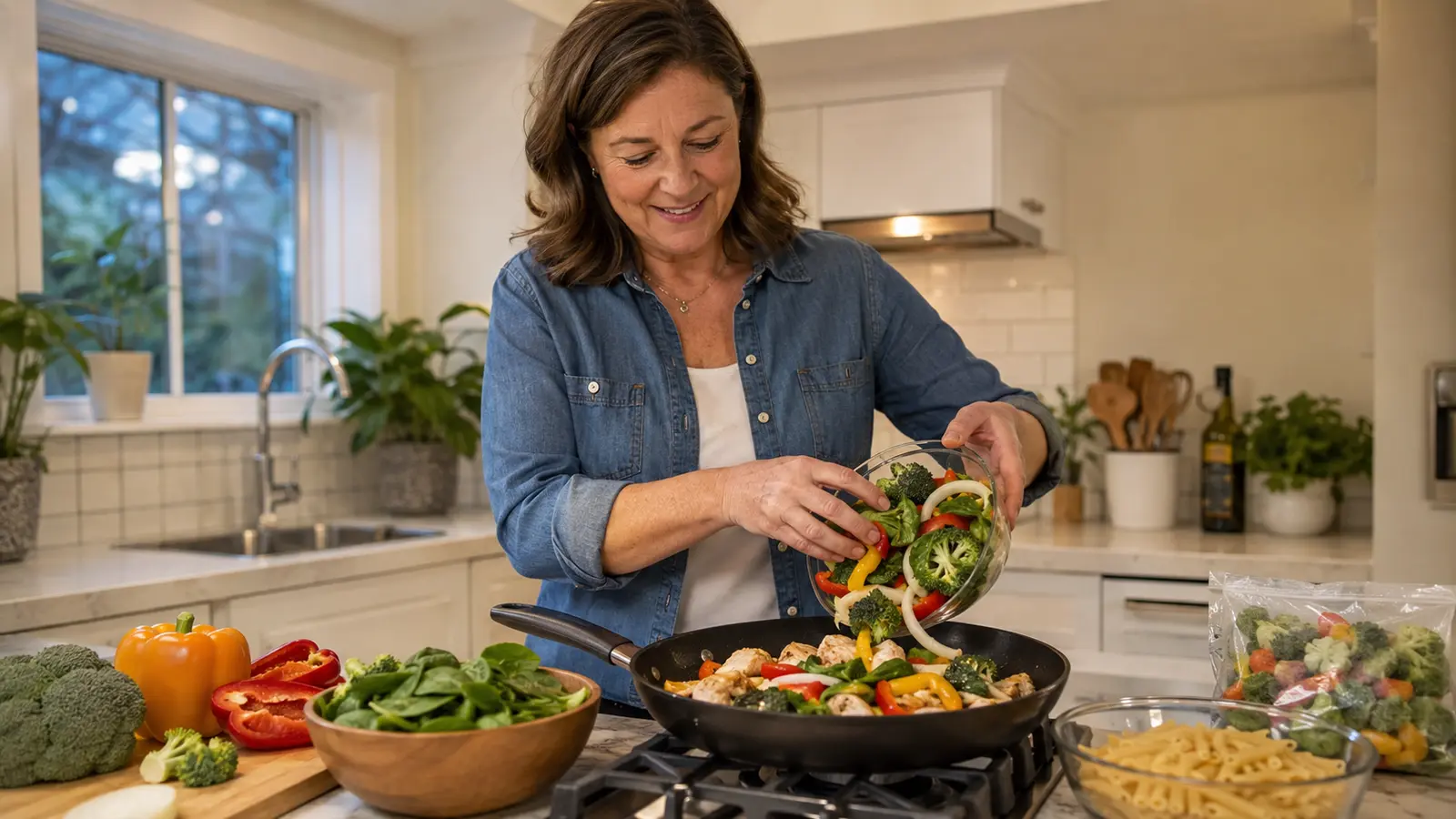
Weeknight dinner does not have to become a complicated nutrition project just because you want to eat more vegetables. A bag of frozen broccoli stirred into pasta, spinach folded into eggs, or peppers added to tacos can make a familiar meal more varied without requiring a separate “diet” dish.
Vegetables can contribute fiber, vitamins, minerals, color, and texture. Because many also contain water and fiber, they can add volume to a meal. Still, they are not a magic weight-loss solution, and simply piling vegetables on top of everything you already eat does not guarantee a particular result. A more practical approach is to use them in ways that fit your appetite, preferences, budget, and routine.
Think substitution, not just addition
If weight management is one of your goals, a sustainable substitution may be more useful than adding an extra side to an unchanged meal. For example, you might replace some of the meat in taco filling with mushrooms and beans, swap part of a large portion of pasta for zucchini and peppers, or use vegetables to give a rice bowl more volume while keeping the flavors you enjoy.
This is not an instruction to remove favorite foods or make vegetables the entire meal. It is a flexible way to adjust the balance of familiar dishes. The CDC explains that fruits and vegetables can support weight management when they replace some higher-calorie ingredients, while merely adding them does not automatically reduce calorie intake. Its guidance on fruits, vegetables, and weight management also notes the value of their fiber, nutrients, and meal volume.
Substitution can also be partial and gradual. You might begin by mixing a cup of vegetables into a family-size dish rather than rebuilding every plate. Keep enough of the original ingredients for the meal to remain satisfying. If adding vegetables leaves you hungry or makes the meal less enjoyable, adjust the combination instead of assuming that a bigger vegetable portion is always better.
Use the vegetables that work on a weeknight
Fresh vegetables are useful when you like their flavor and expect to use them before they spoil. Choose options that require little preparation, such as baby spinach, cherry tomatoes, bagged slaw, snap peas, pre-cut mushrooms, or washed broccoli florets. Pre-cut produce may cost more, but it can be worthwhile when the alternative is buying vegetables that go unused.
Frozen vegetables are often the easiest answer for busy nights. They are already washed and cut, remain available for weeks, and let you cook only what you need. Plain frozen broccoli, peas, spinach, peppers, corn, cauliflower, or mixed vegetables can go directly into many meals. Sauced varieties can also fit, but checking the label helps you choose the flavor, sodium, and added ingredients that suit your needs.
Canned vegetables can be convenient and budget-friendly. Look for versions without heavy sauces or added sugar when that matters to you, and consider lower-sodium or no-salt-added choices. If sodium is a concern, compare labels and choose a lower-sodium or no-salt-added option when available. Tomatoes, green beans, corn, carrots, peas, pumpkin, and artichoke hearts can all shorten dinner preparation.
The USDA MyPlate overview of the vegetable group recognizes raw, cooked, frozen, and canned vegetables as options and emphasizes variety rather than one ideal form. Your best choice may change from one week to the next.
Add vegetables to meals you already know
You do not need a collection of special recipes. Start with a dinner that is already in your rotation and identify one place where a vegetable would make sense.
Pasta
Stir frozen spinach, peas, broccoli, or a pepper-and-onion blend into the sauce as it heats. Add mushrooms or zucchini to ground meat, lentils, or beans for a heartier sauce. For picky eaters, serve one familiar vegetable on the side or blend a small amount of cooked carrot or squash into a smooth sauce without pretending it is something else.
Tacos and quesadillas
Cook diced peppers, onions, mushrooms, corn, or zucchini with the filling. Set out shredded lettuce, cabbage, tomato, salsa, or avocado so everyone can choose what they like. Keeping toppings separate can make a new texture feel less overwhelming and avoids turning dinner into a disagreement.
Rice bowls
Warm frozen mixed vegetables while the rice cooks, then add a protein and sauce you enjoy. Roasted broccoli, canned corn, shredded carrots, cucumber, edamame, cabbage, or leftover vegetables can all work. A bowl format makes it easy to adjust proportions and ingredients for different family members.
Soups and stews
Add frozen vegetables, canned tomatoes, chopped greens, or leftover roasted vegetables to a canned soup or homemade pot. If you prefer a smoother texture, blend cooked cauliflower, carrots, squash, or beans into part of the broth. Choose lower-sodium products when appropriate, then season to taste.
Eggs
Spinach, mushrooms, tomatoes, peppers, broccoli, or leftover roasted vegetables can turn scrambled eggs, omelets, or a frittata into dinner. Cook watery vegetables first so the finished eggs have a texture you like. A handful is enough to begin; there is no need to force every option into one pan.
Sandwiches and wraps
Add lettuce, spinach, tomato, cucumber, peppers, shredded carrots, or bagged slaw. Roasted vegetables can add softness and flavor, while crisp vegetables add crunch. If a heavily filled wrap falls apart, use fewer ingredients inside and serve the rest alongside it.
Sheet-pan meals
Roast a protein and vegetables on one pan, choosing ingredients with similar cooking times or adding quicker-cooking items later. Broccoli, cauliflower, peppers, onions, green beans, carrots, and small pieces of squash are reliable choices. Frozen vegetables can work too; give them room on the pan and expect a softer result.
Convenience foods
Upgrade a frozen pizza with peppers, mushrooms, spinach, or artichokes. Add peas and broccoli to boxed macaroni and cheese, frozen vegetables to instant noodles, or bagged slaw to a rotisserie-chicken wrap. Convenience food plus a vegetable is still a practical meal; it does not have to become homemade from scratch to count as progress.
Make the habit easier on time and budget
Meal planning does not require assigning a different recipe to every night. The CDC’s guidance for healthier meals and snacks describes home planning and varied foods as useful parts of a balanced eating pattern, while recognizing frozen and canned produce as practical choices.
Try choosing two or three vegetables with overlapping uses. Spinach can go into eggs, pasta, soup, and wraps. Frozen peppers can work in tacos, rice bowls, and sheet-pan dinners. Plan delicate fresh produce earlier in the week and keep frozen or canned backups for later. Use leftovers in soup, eggs, fried rice, or a wrap before buying more.
Compare cost per usable portion rather than assuming fresh is always cheaper. A larger bag is not a bargain if half is discarded. Store vegetables where you can see them, but follow safe refrigeration guidance. If washing and chopping is the main barrier, do a small amount when you have energy or choose pre-cut and frozen options without guilt.
A short backup list can reduce decision fatigue: one frozen vegetable, one canned option, and one fresh favorite are enough. Restock what you actually use rather than buying an ambitious assortment. This keeps the plan flexible when schedules shift and makes food waste less likely.
Work with preference, texture, and family acceptance
Disliking a vegetable prepared one way does not mean you dislike it in every form. Roasting can create browned edges, steaming keeps flavors simple, sautéing adds tenderness, and raw vegetables offer crunch. Seasoning, sauces, cheese, herbs, and dips can make vegetables more enjoyable. They do not cancel the vegetable.
For families with different preferences, use a build-your-own meal or keep one component separate. Invite feedback about flavor and texture instead of labeling someone “picky.” Repeated low-pressure exposure may help, but no one needs to clean a plate or praise a food. Familiarity and choice are often more sustainable than pressure.
Connect vegetables with a realistic overall plan
Learning how to eat more vegetables for weight loss is only one part of an eating pattern. Protein foods, grains, fruit, fats, dairy or alternatives, and enjoyable extras can all have a place. Needs vary, and vegetables do not compensate for inadequate nourishment or turn every meal into a weight-loss meal.
If you want a broader framework, this flexible simple weight-loss plan can help you think about sustainable changes without making dinner overly restrictive. During especially demanding weeks, these realistic healthy habits for a busy week can help you protect consistency without expecting perfection.
Begin with one manageable change
Choose one meal you expect to eat this week and one vegetable that fits it. Put frozen peas in Thursday’s pasta, add bagged slaw to Tuesday’s tacos, or heat broccoli beside a convenience meal. If the idea works, repeat it. If it does not, change the vegetable, preparation, amount, or meal.
The goal is not a perfect dinner or a refrigerator packed with produce. It is a small, useful change you can make on an ordinary night. Over time, a few dependable combinations can make vegetables feel like a normal part of weeknight meals rather than another task on your list.
This article provides general nutrition information and is not individualized medical advice. Food and weight-management needs vary. If you have allergies, digestive concerns, kidney disease, another medical condition, take medication that affects appetite or nutrition, are pregnant, have an eating-disorder history, or follow a prescribed diet, ask an appropriate healthcare professional or registered dietitian what is suitable for you.
Discover more from Diets & Weight Loss Plans
Subscribe to get the latest posts sent to your email.