

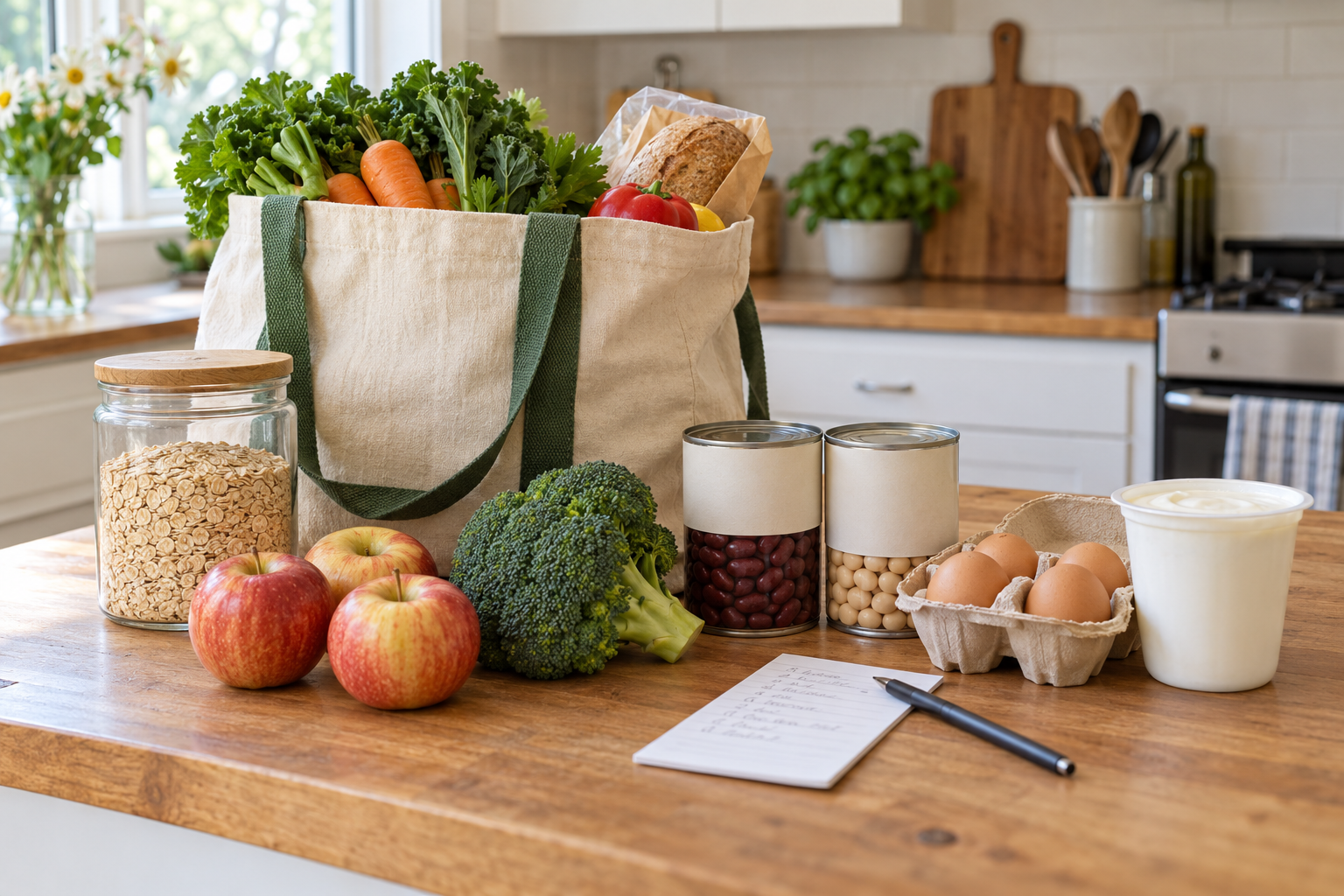
Healthy grocery shopping for weight loss starts with a short list of meals you can actually make—not a cart full of foods you feel you should eat.
Choose a few familiar meals, check what is already at home, and buy the missing ingredients. Leave space in the plan for busy evenings, changing appetites, and foods you enjoy. A useful shopping routine should make eating well easier, not turn every trip into a test.
This guide gives you a practical way to build that list, compare products, and keep convenient options available. It does not promise that a particular food or shopping list will cause weight loss.
Start healthy grocery shopping for weight loss at home
Before opening the store app or picking up your keys, look in the refrigerator, freezer, and cupboards. Write down foods that need a meal assigned to them: half a bag of rice, a package of frozen vegetables, or beans you bought for a recipe that never happened.
Next, check your real calendar. An evening with ten minutes to spare needs a different plan from a relaxed Sunday. Choose two or three dinners, a repeatable lunch, and a breakfast you like. You can repeat meals; a grocery list does not need seven new recipes.
If deciding on meals is the sticking point, start with our flexible weekly meal-planning routine. Then use this article to turn those choices into a shopping list.
Give each main ingredient more than one job
Imagine buying a tub of plain yogurt, oats, fruit, eggs, beans, rice, and a vegetable you enjoy. Yogurt can go with breakfast or become a dip. Beans can fill a wrap or join a rice bowl. The point is to connect purchases to meals rather than buy ingredients that need another shopping trip to become useful.
Here is an example of how to plan ingredients. It is an illustration, not a prescribed menu or a calorie target. Adapt it to allergies, preferences, and any dietary advice you follow.
| Food to buy | First use | Another use |
|---|---|---|
| Oats | Breakfast with fruit | Overnight oats for a workday |
| Beans or lentils | A rice bowl | Soup or a wrap filling |
| Eggs, tofu, or another preferred protein | A quick dinner | An easy lunch |
| Frozen vegetables | A stir-fry | A side for another meal |
| Fruit you enjoy | Breakfast | A snack or dessert |

Build a list that includes meals, snacks, and a backup
A dinner-only list leaves a lot of eating unplanned. Add the things you reach for before work, between meals, or when cooking falls through. Include enough food for the people who will actually eat it. Buying too little in the name of being “good” can leave your plan impractical.
- Meal ingredients: the missing items for the meals you chose.
- Breakfast and lunch basics: foods you can assemble without much thought.
- Produce you will use: fresh, frozen, or canned options that suit the meal.
- Snacks you enjoy: options that fit your appetite and routine.
- One backup meal: a familiar combination you can prepare when time or energy runs short.
For lunch ideas that can share ingredients, see our easy lunches you can pack. Choose one or two that appeal to you instead of buying ingredients for the entire list.
Shop the whole store, including convenient foods
You do not have to limit shopping to the outside aisles. Canned beans, frozen vegetables, oats, and other useful staples often live elsewhere. University of Minnesota Extension’s grocery store tour includes canned and frozen produce and describes beans as a lower-cost protein option.
Choose the form you are likely to use. If washing and chopping is the barrier, a prepared option may deserve a place in your budget. If fresh produce regularly gets overlooked, try a smaller fresh purchase and keep a frozen option available.
Convenience is a practical consideration. A food you can prepare after a long day may serve your routine better than an ambitious ingredient that stays untouched. Compare the label and cost, then decide how the item fits the meal.
Use the Nutrition Facts label to compare similar foods
Start with serving size and servings per package. The FDA explains that label serving sizes reflect typical consumption; they are not instructions for how much you personally should eat.
When comparing two similar products, check that the listed amounts refer to comparable servings. Then consider the nutrients relevant to your needs, such as fiber, sodium, saturated fat, or added sugars. The lowest-calorie package is not automatically the most useful choice for your meal.
You do not have to analyze every item in the aisle. Pick one category you buy often, compare a couple of options, and keep moving. If a clinician or dietitian has given you specific targets, use those rather than a general rule from a blog.
Our practical guide to portion sizes explains the difference between a label serving and the amount you choose to eat.
Compare the cost of food you will actually use
Shelf tags may show a unit price, such as cost per ounce. Compare like units before assuming the largest package is the better deal. Also consider whether you have room to store it and a plan to use it.
Penn State Extension’s budget-shopping guidance recommends checking unit prices and buying larger packages when they fit both your budget and what you will use. A sale is less helpful if half the food ends up unused.
Set a few priorities before shopping. You might choose a less expensive brand of a staple so there is room for the prepared vegetables that save you time. That is a budget decision, not a failure to shop the “right” way.
Make the next meal easier when you unpack
Put the ingredients for your next meal where you will notice them. Group a few shelf-stable items for the backup meal, and keep your list somewhere you can reuse it. Follow package storage instructions, especially for perishable foods.
After the week, make a quick note: What did we use? What stayed untouched? What was missing when we were tired? Those answers are more useful for the next shopping trip than judging yourself for an imperfect week.
Common grocery-shopping questions
Do I need special diet foods?
No particular branded diet product is required for this shopping routine. Build meals from foods you enjoy and can afford, while taking your individual nutritional needs into account.
Can I include treats?
Yes. A list can include enjoyment as well as convenience and nutrition. Plan for what you want rather than treating the purchase as evidence that the whole trip went wrong.
Will this list make me lose weight?
No shopping list can guarantee a result. Food choices and amounts, activity, health conditions, medications, and other factors affect weight. Use the list to support a workable routine, not as a promise.
Try one small change on your next trip
Choose two meals, check your cupboards, and write down what is missing. Add breakfast, lunch, snacks, and one backup meal. After shopping, keep the list and improve it next time. Healthy grocery shopping works best when it matches the life you actually live.
Health note: This article provides general education, not a personalized weight-loss plan. A registered dietitian or your healthcare professional can help adapt food choices for medical conditions, medications, pregnancy, or a history of disordered eating.
Sources and further reading
- University of Minnesota Extension: Grocery store tour
- FDA: How to understand and use the Nutrition Facts label
- Penn State Extension: Eating healthy on a budget
Discover more from Diets & Weight Loss Plans
Subscribe to get the latest posts sent to your email.