

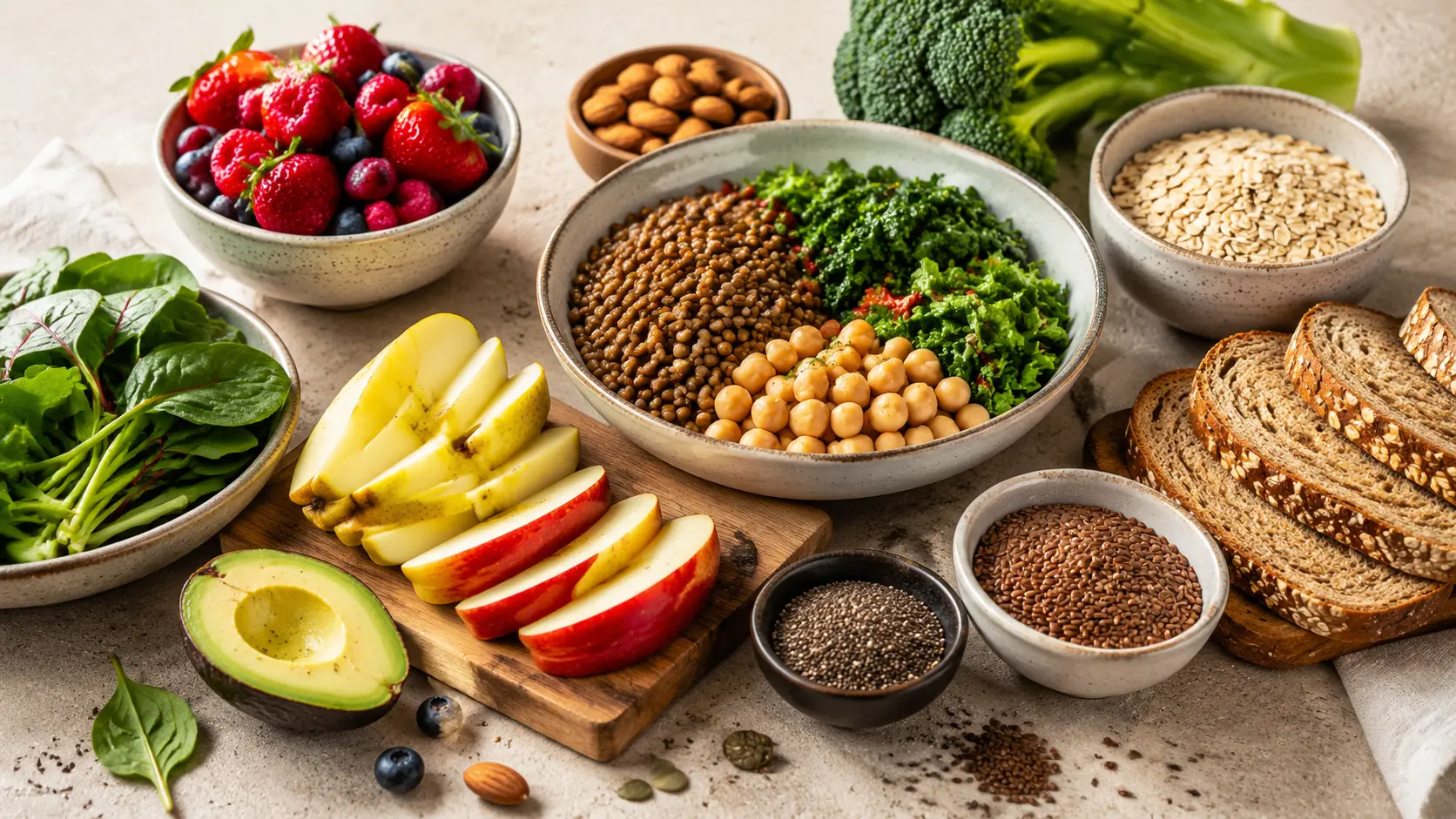
Choosing high-fiber foods for weight loss can make meals feel more substantial—not because fiber burns fat, but because fiber-rich plant foods add volume and texture and may help some meals feel satisfying for longer. They also encourage a varied eating pattern built around plant foods.
The most practical approach is to choose foods you enjoy, add them gradually, and drink enough fluid as your fiber intake increases. You do not need an extreme diet or an overnight overhaul.
Health note: Weight loss is influenced by your overall eating pattern, activity, sleep, medications, hormones, and health conditions. Fiber can be a useful part of a sustainable plan, but it is not a stand-alone treatment.
How fiber may support weight loss
Dietary fiber is the part of plant food that the body does not fully digest. Practical sources include vegetables, fruit, beans, lentils, whole grains, nuts, and seeds.
Fiber may support weight-management efforts by:
- Adding volume and texture to meals
- Helping some meals feel satisfying for longer
- Encouraging the inclusion of whole and minimally processed plant foods
Fiber does not independently cause fat loss or automatically make a food low in calories. Nuts, seeds, and avocado, for example, provide useful nutrients and fiber but are also energy-dense. Portions and the overall eating pattern still matter.
A useful label reference point
The Daily Value shown on U.S. Nutrition Facts labels is 28 grams of fiber per day for a 2,000-calorie diet. Your individual needs may differ according to factors such as age, energy needs, and health circumstances.
You do not need to reach a precise target immediately. If your current intake is low, increasing it in small steps is often more comfortable than making a sudden jump.

1. Beans, lentils, and peas
Legumes are practical fiber-rich foods that also provide plant protein. They can make soups, salads, grain bowls, tacos, and simple dinners more substantial.
Options include:
- Lentils
- Chickpeas
- Black beans
- Kidney beans
- Pinto beans
- Split peas
- Edamame
Easy ways to add them
- Mix a few spoonfuls of beans into taco meat or chili.
- Add chickpeas to a salad.
- Stir lentils into soup or pasta sauce.
- Replace part of the meat in a familiar dish with beans.
- Use rinsed canned beans when convenience matters.
If beans cause discomfort, start with a small portion. Rinsing canned beans and increasing the amount slowly may help. Some people also find lentils easier to introduce than larger beans.
2. Berries and other whole fruit
Whole fruit provides fiber, water, vitamins, minerals, and natural sweetness. Berries can be a useful choice, but there is no need to limit yourself to one type of fruit.
Useful choices include:
- Raspberries and blackberries
- Pears and apples with the skin
- Oranges
- Kiwi
- Bananas
- Peaches and plums
Easy ways to add them
- Add berries to yogurt or oatmeal.
- Pair an apple or pear with a protein-containing snack.
- Keep frozen fruit available when fresh fruit spoils too quickly.
- Choose whole fruit more often than juice when you want the fiber found in the intact fruit.
Whole fruit does not need to be avoided simply because it contains natural sugar. Consider it in the context of your overall eating pattern and individual needs.
3. Non-starchy vegetables
Vegetables can increase the size, color, and texture of a meal without requiring a complicated recipe. Variety matters more than finding a supposedly perfect vegetable.
Practical choices include:
- Artichokes
- Broccoli
- Brussels sprouts
- Carrots
- Green beans
- Cabbage
- Cauliflower
- Leafy greens
- Bell peppers
Easy ways to add them
- Put frozen vegetables into soup, curry, pasta sauce, or a stir-fry.
- Roast a sheet pan of vegetables for several meals.
- Add shredded cabbage to tacos and sandwiches.
- Begin with one vegetable you already enjoy.
Frozen and canned vegetables can be convenient alternatives to fresh produce. If sodium is a concern, compare labels or rinse canned vegetables before eating them.
4. Whole grains
Whole grains retain more of the grain kernel than refined grains and can contribute fiber. They can fit into weight-loss meals without requiring you to eliminate bread, rice, pasta, or cereal.
Options include:
- Oats
- Barley
- Bulgur
- Quinoa
- Brown or wild rice
- Whole-wheat pasta
- Whole-grain bread
- Higher-fiber cereal with limited added sugar
Easy ways to add them
- Replace half of your usual white rice with brown rice or quinoa.
- Choose bread whose ingredient list begins with a whole grain.
- Add barley to soup.
- Use oats for breakfast or as a yogurt topping.
- Compare fiber values on cereal labels rather than relying on front-of-package claims.
“Multigrain” does not necessarily mean whole grain. The ingredient list and Nutrition Facts panel provide more useful information. Because nutrient values vary by food and serving, USDA FoodData Central can help you look up food-composition data for a specific item.
5. Nuts and seeds
Nuts and seeds supply fiber, unsaturated fats, and some protein. They can add texture to meals, but their calories are concentrated, so a measured portion may be helpful during weight loss.
Choices include:
- Chia seeds
- Ground flaxseed
- Almonds
- Pistachios
- Peanuts
- Sunflower seeds
- Pumpkin seeds
Easy ways to add them
- Stir a teaspoon or tablespoon of chia or ground flaxseed into oatmeal or yogurt.
- Sprinkle seeds over a salad.
- Include a small handful of nuts in a snack.
- Use ground rather than whole flaxseed when you want it to be easier to incorporate into meals.
6. Potatoes and other starchy vegetables
Potatoes, sweet potatoes, corn, winter squash, and green peas can contribute fiber. They are sometimes excluded from weight-loss advice, but preparation and serving context matter more than categorizing them as good or bad.
Try these ideas:
- Eat potato or sweet-potato skin when appropriate and well cleaned.
- Pair a baked potato with vegetables and a protein source.
- Add green peas to pasta, soup, or rice.
- Roast winter squash as an alternative to a refined side dish.
A plain baked potato and a large serving of fries are different preparations with different nutritional profiles.
7. Avocado
Avocado provides fiber and unsaturated fat and can add creaminess to a meal. Because it is more energy-dense than most vegetables, consider using a modest portion as a flavorful component rather than an unlimited extra.
Add it to:
- Toast with eggs
- Grain bowls
- Salads
- Tacos
- Sandwiches
What about fiber bars and supplements?
Packaged bars, cereals, wraps, and drinks may contain added or isolated fiber. These products can be convenient, but responses vary, and large quantities of some added fibers or sugar alcohols may cause digestive discomfort in some people.
When comparing products, check:
- Fiber per serving
- Serving size
- Calories
- Added sugar
- Sugar alcohols
A fiber supplement may be appropriate in some situations, but it does not provide the same mix of foods as a varied eating pattern. Ask a healthcare professional or registered dietitian whether a supplement is appropriate if you take medications or have a condition that affects digestion.
How to increase fiber comfortably
Adding a large amount of fiber at once may cause gas, bloating, cramping, or changes in bowel habits. NIDDK advises adding fiber a little at a time and drinking plenty of liquids to help it work better.
A gentler approach is to:
- Add one small fiber-rich serving per day.
- Maintain that change for several days before adding another.
- Drink fluids regularly as your fiber intake increases.
- Spread fiber across the day instead of concentrating it in one meal.
- Try cooked vegetables if large raw portions are uncomfortable.
- Reduce the portion or slow the progression if symptoms appear.
If you have a digestive condition, a history of bowel obstruction, or recent gastrointestinal surgery, ask a healthcare professional before making a major change in your fiber intake. Seek medical care for severe or persistent digestive symptoms.
A simple one-week progression
This example is flexible rather than prescriptive:
- Days 1–2: Add one serving of whole fruit.
- Days 3–4: Add a small serving of beans or lentils to one meal.
- Day 5: Swap one refined grain for a whole-grain option.
- Day 6: Add a cooked vegetable to lunch or dinner.
- Day 7: Add a small portion of nuts or seeds if comfortable.
You can remain at any stage longer. Sustainable habits matter more than completing every step within exactly one week. The current Dietary Guidelines emphasize eating patterns built on whole, nutrient-dense foods, including vegetables, fruits, healthy fats, and whole grains.
Keep meals practical
When choosing high-fiber foods for weight loss, you do not need a complicated formula. Start with one fiber-rich plant food, include a protein source when practical, and choose flavors and portions that leave you comfortably satisfied.
Examples include lentil soup with whole-grain toast, yogurt with berries and chia, or chicken tacos with black beans and cabbage. For a broader framework, see a simple weight-loss plan that does not feel like a diet. If consistency is difficult when life gets crowded, these healthy weight-loss habits for a busy week offer flexible planning and reset ideas.
The bottom line
High-fiber foods for weight loss can support satisfying, sustainable meals, but fiber does not independently cause fat loss. Start with familiar foods, increase your intake gradually, drink adequate liquids, and pay attention to comfort. A few repeatable choices—such as berries at breakfast, beans in a favorite dinner, or vegetables added to a convenient meal—are more useful than an extreme plan you cannot maintain.
Discover more from Diets & Weight Loss Plans
Subscribe to get the latest posts sent to your email.